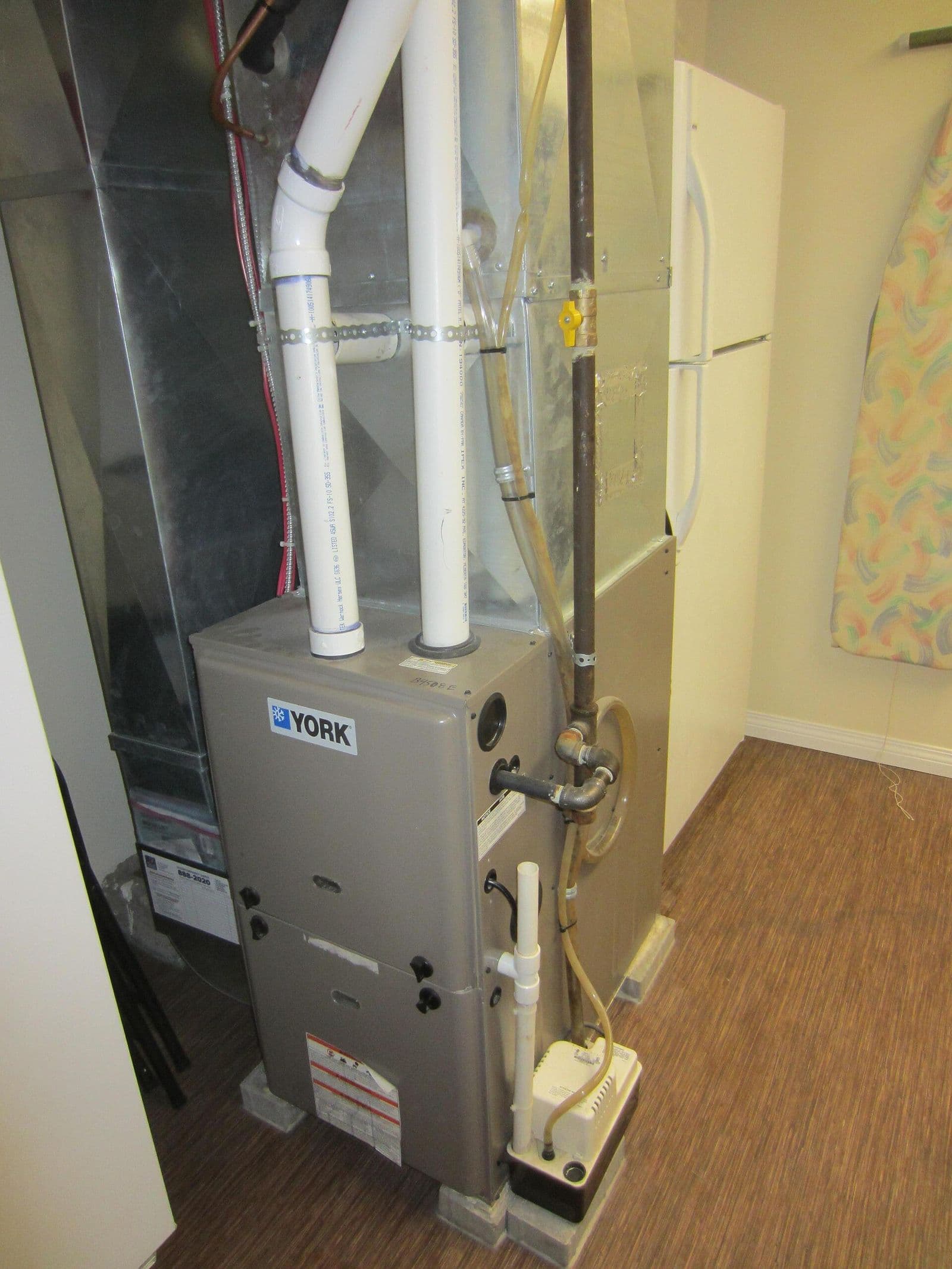
Carbon monoxide is odorless and colorless, and a gas furnace with a cracked heat exchanger, blocked vent, or poor combustion can produce it silently. DFW risk spikes during freezes, when furnaces run continuously and homes are sealed tight, and when generators are misused during Oncor outages. Any home with Atmos Energy gas service and a furnace, water heater, or fireplace should treat CO checks as routine safety work, tied to fall heating maintenance.
The check combines instrument testing and inspection: ambient CO readings, burner flame quality, heat exchanger inspection, vent pipe condition, and draft testing. Findings are explained in plain terms, and any cracked exchanger or vent failure is handled as a shutdown-and-replace safety issue under furnace repair or furnace installation, not a tune-up item.
Carbon Monoxide Safety Check at a glance
- Service
- Carbon Monoxide Safety Check
- Service area
- Dallas-Fort Worth, TX metro (18 towns)
- Permits
- Handled by the HVAC technician
- Pricing
- You approve the price first
Signs
Signs you need carbon monoxide safety check
CO alarm has sounded, even once
A single alarm event that stopped is still an event. The source must be found with instruments before the furnace is trusted again — alarms do not sound without CO present.
Headaches, nausea, or dizziness at home that fade outside
Symptoms that affect several household members, improve outdoors, and worsen when heat runs are a classic low-level CO pattern. Leave, call 911, and get the home tested.
Yellow or flickering furnace flames
Burner flames should be steady and mostly blue. Lazy yellow flames indicate incomplete combustion, which produces carbon monoxide instead of clean exhaust.
Soot, rust, or moisture around the furnace and vent
Soot streaks, heavy rust on vent pipe, and condensation dripping from flue joints all point to venting or combustion problems that raise CO risk.
Old furnace with no recent inspection
Heat exchangers corrode with age and thermal cycling. A furnace that has not had its exchanger and venting inspected in years is overdue for a safety check.
Process
What the HVAC technician does
- 1
Step 1 — Ambient CO measurement
The technician measures CO levels in the living space and at supply registers with the furnace running, establishing whether CO is entering the air stream.
- 2
Step 2 — Combustion and flame inspection
Burner flames, ignition, and manifold pressure are checked, and flue gas is sampled where equipment allows to confirm clean combustion.
- 3
Step 3 — Heat exchanger and vent inspection
The exchanger is inspected for cracks and corrosion, flame behavior is watched when the blower starts, and vent pipe is checked for blockage and deterioration.
- 4
Step 4 — Findings and alarm review
Results are explained plainly, any unsafe condition is shut down and documented, and CO alarm placement and age in the home are reviewed with you.
Pricing
What affects the cost
Every home is different, so we don't publish prices — these are the factors the HVAC technician weighs when pricing the work.
Number of combustion appliances
Homes with a furnace plus gas water heater, fireplace, or range need each appliance's venting and combustion reviewed.
Findings during inspection
A cracked exchanger or failed vent moves the work from a check to furnace replacement planning, which is a separate scope.
Vent repairs needed
Rusted, disconnected, or blocked vent sections found during the check must be replaced before the furnace can run safely.
Access to the exchanger
Some furnace designs allow direct exchanger viewing; others require partial disassembly or camera inspection, adding time.
Alarm installation
Adding or replacing expired CO alarms on each level and near bedrooms is often handled in the same visit.
DIY
What you can do — and what to leave alone
Safe for homeowners
- Install CO alarms on every level and outside sleeping areas, and test them monthly.
- Note the alarm manufacture date — replace any alarm past its printed end-of-life date.
- Keep the furnace area clear and confirm the vent pipe outside is not blocked by nests or debris.
Stop — call an HVAC technician
- If a CO alarm sounds, leave the house with everyone and pets, and call 911 from outside — never search for the source yourself.
- If you smell gas, leave, call 911, then Atmos Energy — do not flip switches or use phones inside.
- Never run a generator, grill, or camp stove inside a home or garage, even during an outage.
- Never disconnect a CO alarm that keeps sounding — treat it as a real reading until professionals clear the home.
- Never operate a furnace with a known cracked heat exchanger or disconnected vent.
FAQ
Carbon Monoxide Safety Check: common questions
What should I do if my CO alarm goes off?
Leave the house immediately with all people and pets and call 911 from outside. Fire departments test with professional instruments and clear the home. Only after clearance should the furnace be inspected — never treat a sounding alarm as a false alarm on your own.
Can a furnace produce CO without a cracked exchanger?
Yes. Blocked or rusted venting, dirty burners, and wrong gas pressure can all cause incomplete combustion and CO spillage. That is why the check covers combustion and venting, not just the exchanger.
How often should a CO safety check be done?
Have combustion and venting inspected every fall as part of [heating maintenance](/hvac-services/heating-maintenance/), and immediately after any alarm event, soot finding, or vent damage. Alarms protect you between checks; they do not replace inspection.
Areas